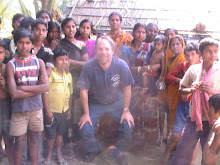
Dr. Richard Benkin is an independent human rights activist who has been part of efforts to correct injustices worldwide. His web site, InterfaithStrength, is linked in his profile.
Friday, April 23, 2021
US COMMISSION ON INTERNATIONAL RELIGIOUS FREEDOM (USCIRF) BETRAYS THE HINDU COMMUNITY YET AGAIN
The United States Commission on International Religious Freedom (USCIRF) issued its annual report that includes a designation of countries as Countries of Particular Concern (CPC), Special Watch List (SWL), or no listing as religious freedom violators, giving the countries not listed a pass. And once again, it failed to list Bangladesh as a CPC or SWL, despite being in possession of massive, vetted evidence showing the oppression of Bangladeshi Hindus with government complicity. Their willful negligence abets and enables the Bangladeshi government to continue allowing the ethnic cleansing of Hindus while believing it can do so without any consequences.
After so many years of enabling Bangladeshi governments, USCIRF has become complicit in the ethnic cleansing of Bangladeshi Hindus. Shame!
In the months before its decision, USCIRF was provided with extensive and specific evidence of the brutalization of Bangladesh's Hindus, and the Bangladeshi government's complicity; but chose to ignore it for reasons that defy understanding. Yet, they continue to place India on the list of CPCs year after year, even though there is no credible evidence that any alleged or actual actions come anywhere near Bangladesh's atrocities in the level of severity, harm, or purposeful ethnic cleansing.
I have to end this blog entry now because this betrayal of Hindus will require some action; and it is best to plan not when one is not so emotionally distressed.
US Senate and International Religious Freedom Commission identify Bangladesh as major rights violator
Sorry for the long time since my last post; I'm hoping that the pandemic has caused everyone to be more forgiving for such lapses. Since my last post, I have been to South Asia multiple times, including a residency in Assam with the Northeast India Corporation and trips to Bangladesh the last of which got me home in the early stages of the COVID-19 pandemic. In the last month, however, December 2020, two events underscored a new, bi-partisan recognition that puts Bangladesh's relations with the US and its ability to see its exports here, in serious jeopardy.
On December 9, the United States Commission on International Religious Freedom (USCIRF) released its long-awaited and comprehensive study, Violating Rights: Enforcing the World’s Blasphemy Laws. The study focuses on government culpability as much as on the inherently anti-democratic nature of the laws themselves. It notes that 84 countries still have blasphemy laws, however, 81 percent of all cases where states enforced them came from only ten; and Bangladesh figured prominently among them, along with Pakistan, Iran, Russia, and others. Is that the company where we should find a country that calls itself democratic? According to USCIRF, the answer is no, as its report notes. “Governments’ enforcement of blasphemy laws undermines human rights, including freedom of religion or belief and freedom of expression.” That, and the palpable fear of government supported violence against minorities, dissenters, and their families, is a far cry from the Bangladesh described in its constitution or envisioned by the Bangabandhu, the nation's founder and father of the current Prime Minister.
To help US policy makers and others make use of its findings, USCIRF noted that blasphemy laws do not always carry the same title. So, for instance, as I noted in my statement to the Commission, Bangladesh’s blasphemy laws exist in Section 295A of the Bangladesh Criminal Code, which according to the US State Department, criminalizes “statements or acts made with a ‘deliberate and malicious’ intent to insult religious sentiments.” Section 99 also allows "the government [to] confiscate all copies of a newspaper if it publishes anything subversive of the state or provoking an uprising or anything that creates enmity and hatred among the citizens or denigrates religious beliefs," violating press freedom as well. Nor has there been an attempt to clarify their provisions. Keeping them vague makes arrest and prosecution possible merely on the feelings of a particular individual who claims to be aggrieved. More from the State Department: “While there is no specific blasphemy law, authorities use the penal code as well as a section of the Information and Communication Technology Act to charge individuals.” More on Bangladesh, blasphemy, and the Internet below.
Bangladesh was also among a handful of nations that USCIRF cited in the report for depriving the accused of due process, something I’ve witnessed all too often. In many cases, there is overwhelming evidence showing attorneys for minority victims being prevented from getting due process for their clients—including a capital case in the constituency Sheikh Hasina has represented for almost a quarter century. Moreover, the USCIRF report cited Bangladesh as one of the worst rights violators in its use of mob violence against alleged blasphemers. Only Pakistan had more such cases than Bangladesh, and the two countries together accounted for 57.35 percent of all cases worldwide. Tellingly, USCIRF cited a report by the international legal group, Open Trial, entitled, “Bangladesh's criminal justice system incapable of providing justice.” It finds that “witness tampering, victim intimidation and missing evidence” are typical and make fair trials impossible with the primary victims being minorities, women and children, the poor and disabled. Along with many others, it notes that such abuses of the criminal justice system exist despite the high-minded words of Bangladesh’s constitution. This is critical because one of Bangladesh’s go-to responses when we identify its anti-minority violence is to cite the words of its constitution, but no one’s buying that anymore. Few people give that much weight against verified evidence of government-tolerated attacks on Hindus and others.
A mere days later, both the US House and Senate passed resolutions condemning blasphemy laws as “inconsistent with international human rights standards,” and calling for their repeal globally. Bangladesh again was cited extensively, In fact, Bangladesh and Pakistan were the only countries called out more than once. The resolutions recognize that many blasphemy laws are hidden in language that criminalizes insults to religious sensibilities (and I suggest you read my testimony to the US Commission on Religious Freedom). Both the Senate and House resolutions enjoyed wide bi-partisan appeal and passed unanimously in the Senate; and—this is what makes it more than a resolution—“calls on the President and the Secretary of State to make the repeal of blasphemy, heresy, and apostasy laws a priority in the bilateral relationships of the United States with all countries that have such laws.”
The point is not that Bangladesh needs to become the democratic nation that it was supposed to be; it should. The message for their leaders should be that their obstinacy in catering to radicals and refusing to ensure their people human rights are putting their economy at serious risk: inability to sell their exports (we're their best customer) or profit from UN peacekeeping, which US taxpayers fund and fear of its loss was the proximate cause of Bangladesh's 2007 military coup.
Later this month, I will be briefing the US Congress about the immediate threat to Bangladesh's 12 million plus Hindus as that country's elections near. Around the time of every major Bangladeshi election, Hindus have been targeted for violence and human rights atrocities.
Given the fact that we expect that the government of Sheikh Hasina does not want this to happen, the United States can take several steps to help her and her ruling party prevent it. When I was in Bangladesh in March, I suggested several (non-violent) self-defense measures the Hindu community can take in advance of almost certain attacks, and I received assurance from several members of the Bangladeshi government that they will take all measures necessary to stop the violence.
Some anti-Hindu violence has occurred already, tied to the upcoming vote; including the arson attack on an entire village--so far with no government sanction against the perpetrators. I continue to gather information from people on the ground there and hope that the government of Bangladesh does the right thing--actually lead--rather than fret about votes.
Now that Judge Brett Kavanaugh is Justice
Brett Kavanaugh, we can focus on real issues again.Election Day is just over three weeks away,
early voting has begun already, and the Democrats have a real chance to re-take
the house.That would mean House
opposition to anything that comes out of the White House, greater Democrat
intransigence, and a "new normal" with a farther left-leaning House
of Representatives.Our hot economy we
have, full employment, and our foreign policy victories are at risk;
and the Dems' putative House Judiciary Chair should they take the House, has
promised yet another investigation
of Brett Kavanaugh as well as his impeachment
if they gain the House.Just the focus
we do not need at this critical time in our history.It also would mean a decidedly more hostile
environment for Israel on Capitol Hill.
In Illinois, we face special challenges
that we must overcome.
When the first Congress of this century
was sworn in, Illinois had one Senator from each major party.Its Congressional delegation of 20 also was
divided evenly among Republicans and Democrats.Twenty-first century has proven to be a much different state, and all signs
are that it is moving further along in a clearly partisan direction.Although Republicans held the Governorship in
2001, 2002, and between 2014 and 2018, they have been the minority in the State
Senate since 2002 and in the General Assembly since 1996.The last Presidential election in which Illinois
went Republican was in 1988 when then Vice President George H. W. Bush defeated
Michael Dukakis.Democrats carried the
state in all subsequent Presidential races by 14 (B. Clinton), 18 (B. Clinton),
8 (Gore), 10 (Kerry), 25 (Obama), 17 (Obama), and 17 (H. Clinton) percentage
points respectively.Similarly, the
split Congressional delegation seems like the memory from a bygone age.Republican Members of Congress in Illinois
are in danger of becoming as rare as those in New England, where there is only
one Republican Senator out of 12 and one Republican Member of the House out of
21.Of those 22 lawmakers from Illinois in
2001, only five remain, all of them Democrats; and the independent Ballotpedia
ranks Illlinois as the 41 most competitive state out of 50.And, then, there’s the Czar from the Back of
the Yards:Mike
Madigan, a name everyone in Illinois knows.
One threat from what is largely one-party
rule in Illinois, not usually addressed, is a repeat of what happened after the
last census.According to the Article
I of the Constitution, each state is to re-apportion its Congressional
seats after each decennial census.After
the 2010 census, Democrats controlled of all branches of government in
Illinois, which meant that their party had a free hand to re-district
the state's Congressional districts in their own image.Even Illinois Democrat leaders have admitted that
the 2010 redistricting was designed to defeat former Congressman Bob Dold
(R-IL-10) and solidify the Eighth District as a base for Tammy Duckworth, who
went on to defeat Republican Mark Kirk to become a US Senator, and whoever her
Democrat successor might be.They have
plans for 2020, too.
As we approach the 2018 midterm
elections, there are 18 House seats from Illinois up for election.This includes seven currently held by Republicans.Right now, two downstate Congressmen, John
Shimkus (IL-15) and Darin LaHood (IL-18), appear safe, as does Adam Kinzinger
(IL-16), whose district is mostly downstate but also includes some communities on
the outermost edge of the farthest Chicago suburbs.One downstate Congressman, Rodney Davis
(IL-13), and Congressman Randy Hultgren (IL-14) from the far Chicago suburbs
currently are leading but are not safe.And two Republicans--one downstate, Mike Boost (IL-12), and the last
Chicago-area Republican, Peter Roskam (IL-6), could be in trouble without a strong
Conservative turnout.Both races are
listed as toss-ups, however, a recent poll by Democrats shows Roskam's opponent
up by five points.Peter Roskam supports
smart health care insurance, a strong United States, and he a leader among Israel's
most steadfast supporters in Congress.His opponent gets funds from J Street and likened President Trump to
Osama bin Laden.All seats in Illinois
currently in Democrat hands are safe to remain as such.
If Roskam survives this election and the
next, Democrats plan to make a Republican victory in the Sixth impossible, as
they did in the Bob Dold's Tenth and Joe Walsh's Eighth.Unless Republican Governor Bruce Rauner gets
a strong boost from a post-Kavanaugh Conservative surge and from revelations of
his opponent's tax fraud convictions; he more likely than not will lose.Democrats currently have nine-seat advantages
in both the Illinois Senate and General Assembly.If none of that changes, Springfield
Democrats will again have no opposition to do as they please after the 2020
census.This is not mere speculation.After the 2010 census, they created some of
the most convoluted Congressional districts in the country to stack the deck against
Bob Dold and others.They promise a
repeat if given the chance, targeting Roskam and any other Republicans left
standing.They will use the anticipated
loss of a seat to force two sitting Republicans to face each other, and with the
same tactics as they used before, assure an almost automatic 12-5 or 13-4
plurality over Republicans in Congress versus the current 11-7; and that will
have national implications for which party controls the House.
There’s an even more immediate danger.If elected governor, Democrat JB Pritzker
promises to impose a graduated income tax in Illinois—a disaster both morally
and fiscally.In order to do so,
however, he would need a super-majority in both the Illinois Senate, which he
has it now. He will lose it if only two seats change from Democrat to
Republican.One NW Side seat in Chicago
is pretty sure to go from Democrat to Republican.The key
to stopping Pritzker's graduated income tax, should he have the chance to
impose it, could come down to the State Senate seat in the 29th State Senate
District. The incumbent is Democrat
Julie Morrison, and her Republican challenger, Barrett Davie, has a real shot at
taking the district and stopping to Pritzker's attempt to force us to fund
corruption and inefficiency.I've been
doing work for Barrett Davie, and find that very few voters know about or care
about State Senate races, let alone cast a specific vote in the race. That means a dedicated team of committed
citizens can impact these races far more than the high profile ones.
These races are critical for the future
of Illinois and the entire country.Barrett Davie and every other Republican in these state Assembly and
Senate races need all of us to vote for them and support their
candidacies.Of course, if we avidly
support Republican running for the Illinoisn General Assembly, the other
advantage is an end to Madigan’s autocratic and disastrous rule.Doing both will be difficult in deep blue Illinois,
but getting at least one is not impossible if we mobilize people to take these
races VERY seriously and vote for people like Barrett Davie and Peter Roskam.
Due to my many years of fighting radical Islam, I often find myself with those who are equally militant in the fight against Islamists, but who also believe that Islam itself is the problem. I stand with Dr. Daniel Pipes in saying emphatically that radical Islam is the problem and moderate Islam is the solution. Many of those who demonize Muslims ask why there is no real push back by Muslims against Islamists; that is, that they provide ideological cover for the worst sort of behavior. And it did seem for a while that I kept going back to the Mumbai Muslim community refusing Muslim burial to the 26/11 terrorists. But look at what is happening right now:
Recently, Sindhi Muslims marched in large numbers through the streets of Karachi. On the banner they carried at the head of the march was a picture of an Israeli flag.
In New Delhi, Sultan Shaheen, a practicing Muslim, leads an organization which has credentialed and respected Islamic scholars writing theological arguments against interpretations of the Quran that radicals use to justify their activities.
And the fact should not be lost that these people did and are doing these things at some considerable risk. A few members of the Pakistani military, Taliban allies, were present when the Pashtuns attacked the Taliban; and just ten days later, a Taliban leader warned Pashtun elders not to do it again because "the [Pakistani] military is with us." The Sindhi are unique inside Pakistan with their positive and public show of support for Israel. And my friend, Sultan Shaheen works constantly under the threat of radical retaliation; yet, he has revealed his findings at UN venues and elsewhere.
My book, What is Moderate Islam, makes it clear that success in defeating Islamists to a large extent is dependent on our ability to avoid the deadly polar positions of demonizing all Muslims or rejecting any criticism of Islam; recognizing friends and foes and knowing how to tell the difference.
Pakistan’s Duplicity Continues to Challenge Regional and Global Security
A dear friend and colleague, Imtiaz Wazir,, whose people are fighting both the Pakistanis and their terrorist allies, wrote the following article; which come to us from one of the most difficult places in the world.
In the wake of United States of America’s (USA) policy towards Pakistan in regard to existence of safe heavens alongside Durand Line in Federally Administered Tribal Areas (FATA), Pakistan has once again tried to dupe its international partners. As part of the effort, a military operation titled Khyber-4 was launched in Khyber agency trying to portray that Islamabad is going after the terrorists hiding in the agency.
Mir Ali Area of North Waziristan-Photo credit ISPR
Many political & security analysts and common people of FATA believe that the recent Pakistan military incursion, Khyber-4, launched by Pakistani military in Khyber Agency was a face saving attempt. The military operation was tactically planned to present the sacrifices and commitment of Pakistan government and in particular the army on the fight against terrorism to the United States congressional delegation led by Senator John McCain. The people of FATA believe that the military operation Khyber-4 was launched in a bid to defuse the recent wave of pressure by the international community rather than shunning terror sanctuaries. Conducting such friendly military exercises in FATA for deceiving the international community is a tried and tested formula of Pakistani military establishment. This drama has commonly been performed since Bush era each time an American delegation plans to visit Pakistan administered territories, Islamabad conducts some sort of so-called military raids in FATA, aimed at misleading and pleasing the US administration.
It is worth mentioning that people of Rajgal Valley, the site for the latest episode of “military operations” had already been displaced in 2014 and the valley was under the control of large number of Pakistani troops deployed there. Taking advantage of the opportunity being provided by the US, not only Khyber Agency but the whole of FATA has been shaped as military cantonment by the army where locals have no right to freedom of expression and movement and it still remains no go area for national and international media outlets, Non-Governmental Organizations (NGOs) and other humanitarian organizations. Local residents of FATA going through extreme search while passing any military check-points, only those are allowed who carry “Watan Card” a distinct Identify Card issued by the Pakistani military to the locals including children over age of five.
Director General Inter-Services Public Relations (ISPR), the public relations arm of Inter-Services Intelligence, Maj Gen Asif Ghafoor, said that operation khyber-4, part of wider military operation Radd-ul-Fasaad, was aimed at wiping out terrorist groups including militants of Islamic State (IS) in Rajgal Valley, an operational base for the terrorist groups that are operating from the area and are targeting Afghanistan and Pakistan. As per the reports, the military offensive was supported by the Special Services Group (SSG) commandos and Pakistan Air force. ISPR announced completion of its first phase and claimed killing of 13 terrorists and injuring 6. The announcement also reported that a Pakistani soldier was killed in exchange of fire and a total of 90 kilometers area was cleared where military check-posts were built on the highest and craggiest top of mountain, Brekh Muhammad Kandao, along the Durand Line. The Defence Ministry of Afghanistan has rejected the so-called military offensive and urged Pakistan to take military action against Taliban safe heavens and breeding nurseries existing in Peshawar, Quetta, Islamabad, Lahore, Abbottabad and Karachi instead of bombing mountains in Rajgal Valley of Khyber Agency.
Prior to this, minor and massive military operations, Khyber-1, Khyber-2, Daraghlam (Pashto word for coming after you), Bya Daraghlam (Pashto word for coming after you again) and Khyber-3 were conducted in the same tribal region. Each time Pakistan claimed success and complete eradication of terrorist groups from the area. In the aftermath of each so called military success, Pakistani army established heavy military installations, forts and check-posts throughout the FATA region. However, militancy and militarism in FATA continues to increase with the passage of each day resulting in suppression and bleeding of local people and more power, strength and space is offered to “Good Taliban”. Despite many of military raids, Ansar-ul-Islam and Lashkar-e-Islam leadership including all other groups of Taliban, recognised as good Taliban by Mr. Sirtaj Aziz (Ex-Foreign Affairs Advisor to Prime Minister), are still safe and secure. The locals have witnessed and question that how in every military operation why the militant groups and the notorious Haqqani network has been never taken. It has been noticed that the army always provided safe way for good Taliban and Haqani Network members to leave the area. In the meantime Bara Bazaar in Khyber Agency, Mir Ali and MiranShah Bazaars in North Waziristan and Mehsood belt in South Waziristan has been looted and razed to ground resulting in unbearable economic losses for the local people. Same is the case with Mohmand, Bajaur, Kurram and Orakzai Agencies. Massacre of Pashtuns in Parachinar, capital city of Kurram Agency continues while the so called Good Taliban enjoy patronage of Pakistani military establishment. Military curfew and various inhuman tactics of suppression is a routine practice experienced by twenty million human beings in all seven tribal regions of FATA. Time and again innocent families across FATA have been forced to leave their native homes and many of them are still living in various parts of Khyber Pakhtunkhwa province of Pakistan and south-eastern parts of Afghanistan, where they are suffering worst living conditions because of the displacement. On the other hand, civil and military establishment of Pakistan has been engaged in generating and re-organizing terrorist outfits against Afghanistan, India and US-led North Atlantic Treaty Oganisation (NATO) member countries and strengthening its position along Durand Line which is a clear violation to the decision and promise, Jinnah, the first governor general of Pakistan made with the people of FATA. Entrance of Pakistani military and any governmental step without proper and prior consultation with locals of FATA was strictly prohibited. After the unduly creation of Pakistan, majority of FATA people opposed joining Pakistan and stood for Independent Pakhtunistan under the leadership of Haji Mirza Ali Khan, commonly known as Faqir Ipi, the hero of freedom movement against British imperialism who openly opposed creation of Pakistan and firmly launched movement for independent Pakhtunistan. Most importantly, as per Independence Act, there was no legislation on any valid forum recommending FATA to be a part of Pakistan. This is the reason FATA people question legitimacy of Pakistani state apparatus presence in FATA region and they demand interference of the international community to decide the fate of FATA under the umbrella of the United Nations (UN), potentially the modest way to win this war on terror.
Any change needs high cost of sacrifices but the people of FATA are paying rather higher cost for this double game that the government of Pakistan is carrying in the war on terror. Paving ground for double game and harboring Taliban reign in FATA, the Pakistani army has ruthlessly been slaughtering thousands of those local elders, social and political activists questioning and opposing this bloody game on their soil. In recent years, around two thousand influential community elders across the FATA region have been killed. More than forty thousand innocent civilians in FATA have been slayed by the security agencies and Pakistan government backed Taliban. Their blood was traded by labeling them as local and international terrorists and in return Islamabad received five thousand US dollars per head. It is mentionable that record keeping of civilian casualties in FATA has officially been prohibited. Moreover, social, cultural and traditional valves and norms are being ruined and suppressed on gun point. The common practice of target killing, kidnapping, enforced disappearances, harassment, imprisonment in torture cells by the security agencies and Pakistan supporte Taliban has compelled a large number of liberal and democratic people to leave their native hometowns and take shelter in settled districts of Pakistan and parts of Afghanistan while some of them have relocated to the United Arab Emirates (UAE), thanks to some of the family members based in the Arab country. All seven agencies of FATA and districts of Khyber Pakhtunkhwa and Baluchistan bordering Afghanistan are still serving as launching pads for cross border terrorism against Afghanistan. Only Afghan Taliban’s are currently running more than 15 fund raising centers in Pashtun belt of Baluchistan. The Tahreek-e-Taliban Pakistan splinter groups and the notorious Haqqani network are enjoying freedom in almost all districts of Khyber Pakhtunkhwa where they are being allowed to run offices.
The current state Government in Pakistan and security establishment came under fire when lawmakers raised the issue in a meeting in March in upper house of the Pakistani parliment. Big cities like Peshawar, Gilgit Bultistan, Quetta, Lahore, Islamabad, Abbottabad, Karachi, southern Punjab and Pakistan occupied Kashmir remain safe havens for the leadership and masterminds of more than 50 terrorist and extremists groups where each of them enjoy luxurious lives in highly secured zones.
Islamabad assumed important position in US geopolitical interests in the region following 9/11 and the subsequent war on terror. Bilateral relations between the two countries were bolstered when Washington named Pakistan a major non-NATO ally in 2002 which provided an opportunity to Islamabad to receive billions of US dollars as military and civilian aid. The aid meant for fighting terrorism, however; is being used for strengthening its position along Durand Line and for nurturing of various terrorist outfits against Afghanistan, India and US-led NATO member countries. Keeping in view the pro-terror role and duplicity, the Saban Center for Middle East Policy at Brooking Institution in its analysis published in 2008 declared Pakistan as World’s most active terror sponsoring state. The US author Danoel Byman also once wrote, “Pakistan is the today’s most active terror sponsor state”. Washington, nevertheless; was reluctant to voice concerns loudly against Islamabad.
While the US continued to turn a blind eye on double game policy of Pakistan, President Ashraf Ghani led Afghan government genuinely came forward at the beginning of 2015 to make peace with its hostile neighbor and to change Islamabad’s Taliban bloody game. Violating all the democratic and diplomatic norms, the Afghan President made a visit to Pakistan Army General Headquarters (GHQ) for the sole purpose to establish durable peace and stability in Afghanistan and in the region. Beijing and Washington got on board and the Quadrilateral Group launched a round of peace efforts to eliminate the trust deficit between the two countries. In addition to that, several regional economic cooperation initiatives involving West, South and Central Asian states provided Pakistan perfect opportunity to turn around and abandon its terrorism projects. But Pakistan, dominated by the Zia’s era policy, use of radical non-state actors to achieve its foreign strategic interest in the region but missed the opportunity. As a result, the Taliban militants have been able to expand and intensify its onslaught. It was a case of generous Pakistani lobby in Washington, prolonged underestimation or simply a chaotic AfPak strategy, the US did not challenge Islamabad’s role in any serious and constant way. Finally this spring, US policy-makers felt fatigue with Pakistan’s continued double game and opted to look for alternative options.
In a radical move, the US Congress raised concerns over continuation of aid to Pakistan and passed a bill imposing restrictions on USD450 million aid and supply of eight F-16 jet fighters. Since 2002, the average annual US aid to Islamabad remains USD2bn and in 2010 alone, Islamabad was provided USD4.5bn in military and development aid. In return, Pakistan grew and flourished anti-American sentiments among the country people. Public opinion polls in Pakistan indicate that majority of Pakistanis consider the US as a bitter enemy. The former US envoy to Afghanistan and Iraq, Zalmay Khalilzad, former Pakistan Ambassador to Washington, Hussain Haqqani, former Chiefs of National Directorate of Security (NDS) of Afghanistan Rahmatullah Nabil and Amrullah Saleh, Chief of Mutahida Qaumi Movement, Altaf Hussain, and democratic school of thought in FATA have repeatedly urged Washington to get tougher on Pakistan to win war on terror. A US Congressman Adam Kinzinger is of the opinion that the United States must put hard lines of its foreign policy when it comes to its ties with Islamabad. He said in May 2017 while addressing at an event held at Wilson Centre that Washington should go for any effective measures to make Pakistan comply with United States Afghanistan strategy and even if that entails crossing border. Similarly, European Parliament Vice President Ryszard Czarnecki in his opinion piece published in May 2017 emphasized on US and European Union (EU) to revisit Durand Line to end Pak terror policy. Another member of European Parliment, Petras Austrevicius, in June 2017 called Pakistan undeclared factory of terrorism and so-called Jihad. He called on EU and responsible Western democracies to come together and send a strong message to Pakistan that they have zero tolerance towards support to terror groups and networks. The US armed Services committee Chairman, Senator John McCain has also been working for effective US strategy on Afghanistan.
Besides all these Pakistan is moving on its old track in war on terror and currently sleeping in a bed with China and Russia to counter and defuse the pressure by international community. However, the above mentioned respected voices against Pakistan’s double game, killing of Taliban and Al Qaeda leadership inside the settled districts of Pakistan, imposing conditions on civil and military aid to Pakistan, more focus on Afghanistan and weighting India are encouraging signals in the new US policy. However, words need to translate into action, practical measures restraining Pakistan’s support to terror outfits and joint global community’s pressure on Pakistan will help in making Pakistan retreat from its usual double game. Else, continuation of this double game can result in larger security threats experienced by the West in 2001 in the shape of 9/11.
Imtiaz Waziri (twitter@imtiazwaziri) is a Pashtun Nationalist politician from North Waziristan and former Central Chairman of Pakhtun Students Federation, Pakistan. He is connected on ground to his tribe and community and as such has first-hand information about proceedings in the FATA region.
Most reaction on the Facebook page for my new book, "What is Moderate Islam," has been positive. As I mentioned when first approached about the book, people are hungry for good information and real-life insight. Otherwise, they are left to make sense themselves of the frequent terrorism carried out in the name of Islam. At the same time, there also has been a string of reactions essentially saying that there is no such thing as "moderate Islam"; that all Muslims are either waging jihad or waiting in the weeds for the right time to do so. They are wrong both ethically and factually. As the noted scholar and activist, Dr. Daniel Pipes, has told us, it is a mistake to confuse Islam the religion with Islamism the ideology. Pipes is also a long time supporter of my work, and he contributed a chapter to What is Moderate Islam. In that chapter, "Smoking out Islamists with Extreme Vetting," Dr. Pipes provides us with a set of insightful questions to get beneath any veneer of moderation to the essence of a radical's beliefs. They also help us recognize that most Muslims are not open or closet jihadis.
Those who insist that all Muslims are jihadis are no different than those who insist that Jews control the banks, all Christians are crusaders, or all Hindus are passive and weak.
Beyond being wrong, that is a strategic cul de sac; it leads to nothing productive. Where do you go from declaring a fourth of humanity your enemy? Do you issue blanket rulings, taking actions that sweep up the innocent with the guilty? What do you do about children? Are Muslim children also "eventual" jihadis so subject to the same action? Do you reject allies simply because of their faith? Do you tell Muslim leaders that their interests are the same as those of suicide bombers? And do we force friends to become enemies? Perhaps the impossibility of taking action that is both moral and effective is a reason why many who insist on their position do nothing other than yell.
On the other hand, those of us who have been on the front lines in the fight against radical Islamist terror know that we fight alongside of Muslims no less so than others. In my fight to save Bengali Hindus from Islamists, I often am accompanied by Muslims who have put their own lives in jeopardy standing up for Hindus. Similarly, no one would ever consider Robert Spencer soft on radical Islam or an appeaser. Spencer is the director of Jihad Watch and an outspoken critic of those who take claims of moderation at face value. In his review of What is Moderate Islam, he called the book "essential reading" for "befuddled" policy makers. He is smart enough and knowledgeable enough to know that we defeat our real enemies only when we have identified them and those who give them ideological cover; and we have distinguished friend from foe.
And that is the rationale for What is Moderate Islam. Radical Islamists are arguably the greatest source of international instability in the 21st century. We must defeat them and their ideological supporters. Too often, however, all people have to choose from are two extremes: either all Muslims are really jihadis or it's racist even to discuss a link between Islam and terror. They need more than empty fist shaking or fear of being labeled. What is Moderate Islam contributes to that by recognizing that both extremes are dangerous; that there is something better.
The Congressional Israel Victory Caucus was launched only short time ago (April 27, 2017), and it already has generated a stream of commentary. That's good. Because for years, I have said that no matter where people stand on the Israel-Arab conflict, we all can agree that the current "peace process" (re-labeled by Middle East Forum founder and scholar Daniel Pipes as a "war process") has not brought us any closer to peace. Three decades of endless negotiations make resolution of the conflict less likely, not more.
The Israel Victory Caucus intends to support US policy and legislation that furthers conflict resolution through an Israeli victory, and to work against policy and legislation that places artificial restraints on Israel that only prolong the conflict.
Co-chair, Congressman Bill Johnson (R-Ohio) noted that the current situation only creates uncertainty among all parties with regard to a possible and moral endgame, and that the US and others must send the Palestinians a strong and clear message to give up their goal of destroying Israel. Congressman Ron DeSantis (R-Florida), the other co-chair noted that Israel is the only state in the Middle East with which the United States has shared values. "Israel is not the problem in the Middle East. Israel is the solution."
Some specific goals of the Caucus: for the United States to move its embassy to Jerusalem to signal its support for an undivided Israeli capital there; cutting off US funds to the Palestinian Authority so long as it continues to provide financial support to families of suicide terrorists and continues its formal anti-Israel and anti-Semitic incitement through its leaders and institutions.
Perhaps Dr. Pipes put it most succinctly by saying that "When the Jews of Hebron have no more fear for their safety than the Arabs of Nazareth, the war will be over."
The January post for this blog was about "The Balochistan Project" (see below). The Balochistan Project is an NGO that was built from the Thailand government's suppression of our peaceful conference in November 2016. The Balochistan Project is an amalgam of activists and academics, committed to informing people about the Baloch people, Balochistan, and the challenges they face, particularly from the occupying powers of Pakistan and Iran; leading to justice for the Baloch.
Recently, we incorporated as a not-for-profit in the United States and have been granted official 501(c)3 status by the United States government. That means we are a tax free body and can put all of our funds to work furthering the stated aims of our NGO. Our job is to gather, validate, and disseminate information about the Baloch and Balochistan. Many Baloch leaders already support that effort.
We have put up a web site, www.balochistanproject.com, where readers can choose among Balochi, Urdu, Farsi, and English. Soon we expect to set up a mechanism for donations that will allow others to support this great effort to bring justice to the Baloch.
Dr. Richard L. Benkin
President, The Balochistan Project
For some time now, I have familiarized myself with several nationalities living in what is now Pakistan: Baloch, Sindh, Pashtun, Kashmiris, Gilgit Baltistanis, Punjabi Hindus, and others. Since Pakistan's creation in 1947--a statement by the Indian Subcontinent Muslim League that Muslims and Hindus cannot live together--these national groups have been chafing under various forms of oppression and the attempted eradication of their national characteristics.
Pakistan is an artificial, polyglot rump state that was once part of a large "Indian" entity; in 1971, its lost its remaining, non-contiguous Bengali portion (then called East Pakistan) when it broke away to form Bangladesh. What makes Pakistan different from India, the other part of the British Raj's partition of the greater subcontinent? Although Pakistan did not declare itself an Islamic Republic, with Islam as the official state religion, until 1956; it was in fact created as a Muslim-dominated country. This is contrary to the history of India, which has maintained its status as a secular state, with no official state religion. Additionally, Indian authorities come from a range of its subgroups and nationalities. Pakistan is and has been dominated by one: Punjabis, and specifically Muslim Punjabis. Further, although India has seen many incidents of serious inter-communal violence by Muslims and Hindus against one another; the minority Muslims enjoy a range of protections that the state has enforced with vigor. Such has not been the lot for Hindus in Pakistan who complain--with a good deal of evidence--that Pakistan is guilty of an anti-Hindu jihad. I have been to the camps in New Delhi of Hindu refugees from Pakistan and taken the refugees' testimony of their oppression--both in violent incidents and in regular day-to-day oppression of Hindus, including forced conversion which the government does not criminalize. Thus, in Pakistan's 1951 census, Hindus were counted at 12.9 percent of the population. In 2014, they were down to 1.85 percent with a net decrease in population of about 17 percent. In contract, from 1951 to 2011, Indian Muslims grew from 9.8 percent to 14.2 percent with a net increase in population of almost 400 percent.
Internationally Pakistan has a well-founded reputation for oppressing its own people, supporting an intelligence service that has been defined by some countries as a terrorist group, proliferating nuclear weaponry, massive corruption, and sponsoring worldwide terrorism, especially against India. These national groups--especially the Baloch (predominantly Muslim), the Pashtun (predominantly Muslim), and the Sindhi (predominantly Hindu)--offer a way out of this morass. All of them have a history that eschews an official religions and welcomes others as equal members of the same polity; regardless of faith, they are strongly anti-Islamist; they believe in allowing different ethnic and national groups to develop as nations (whether within a confederation or independently); and they are fighting against the human rights atrocities that have become daily life for many inside the nation of Pakistan. The next few years will be critical. Pakistan and China have been developing the China-Pakistan Economic Corridor (CPEC), which the Pakistanis believe will make them immune to demands from democracies and those fighting radical Islamic terror. That expansion of Chinese dominance all the way to the warm water port of Gwadar in Balochistan, threatens both US and Russian interests and could be the basis for the sort of common interest cooperation suggested by US President Donald Trump. Many youth among the Baloch and Pashtun, have been looking for the West to support their insurgencies but are finding that the only real support they get is from Islamist groups. If we do not support these efforts, it's likely that more will join with Islamists in the (probably mistaken) hope that it will bring relief to their peoples. And there are regional implications: Indian Prime Minister Narendra Modi already has expressed support for the Baloch and has interests in what happens to its perennial rival; Afghanistan often identifies as a Pashtun state; and Balochistan is occupied by both Pakistan and Iran. There are many restive national minorities in both countries. Pakistan is only about half Punjabi; and Iran is only about 40 percent Persian. There is a lot of opportunity to keep those terror-supporting nations busy trying to stay together as states, such that their pursuit of international goals would be suppressed.
We have the opportunity, and many of the leaders of these groups have told me they are hopeful of a change in US policy that will help their causes while they together end up advancing US interests. But the clock is ticking.
One of the things that came out of the Thailand government's anti-democratic actions against our peaceful meeting (see December 9 blogpost); was a decision for us to create an NGO that would be the repository of validated information about human rights atrocities against the Baloch by the occupying powers. "The Balochistan Project" will be a sharpened sword pointed against those who continue to commit these atrocities and suppress Baloch nationality--which existed before their own.
Next month, The Balochistan Project will convene its inaugural gathering in London. Many of the principles who will attend have been working on our answer to Pakistani and Iranian oppression since the incident they supported in Thailand. Thus, their anti-democratic actions in fact are having precisely the opposite impact that they intended.
The Balochistan Project is committed to truth and justice; that is, we have developed methods to verify the numerous reports already coming to us; such that we will provide world leaders with information that we know will stand up against by denials by Pakistan, Iran, and their enablers.
Principles of The Balochistan Project also have been reaching out to or contacted by other oppressed nationalities from what is now called Pakistan: secular Pashtun, Sindhi, Punjabi Hindus, and others. Stay tune, because you will be hearing a lot more about The Balochistan Project and eventually, the liberation of these nationalities. Victims of a real occupation.
Last week, about 100 people were to gather in Bangkok for a conference about the Baloch--what is happening to that people and what can be done about it. The meeting never happened. There have been suggestions that the Chinese were behind the action, as part of its protecting the Chinese-Pakistan Economic Corridor; and in speaking with Thai and American insiders, I was told that Chinese influence there is huge and growing. Pakistani ISI involvement also has been alleged, and it would not be unusual for the Pakistanis to attack the Baloch. To whatever extent the Chinese and Pakistanis were involved, ultimate responsibility for this undemocratic action is Thailand's. Freedom House classifies Thailand as "not free," and it is only because of this lack of democratic guarantees that the Thai authorities could act as they did.
I was to be a keynote speaker, but when my flight arrived at Bangkok's Suvarnabhumi airport, no one greeted me as arranged, and all my communications were met with silence. I took a cab to the hotel, and as it was late, retired and resumed my attempted contacts in the morning. After more silence, I went downstairs for breakfast; where I was accosted by associates who told me that Thai police broke up the conference, and arrested and deported the organizer Munir Mengal. I replied that we all came out here for the Baloch and had to make the trip worthwhile for them.
We began meeting, but Thai authorities and the hotel (which we are told was Chinese affiliated) continued with ongoing harassment. Internet access was blocked; we were roused and told to pay our bills in advance or face arrest, and the police maintained a threatening presence. Before the first day ended, all but five of the conference attendees fled, leaving myself, Dr. Robert Darius, Reza Hosseinbor, Sylvia Russell, and Claudia Wadlich to carry on the struggle; which we did. After several meetings, we arrived at a number of fruitful conclusions about unity among Baloch factions, bringing the Baloch case before national and international bodies, and the illegality of Balochistan's occupation. We also agreed to form an NGO/Think Tank for the purpose of gathering, validating, and strategically disseminating evidence of human rights violations against the Baloch by the occupying powers.
As we are fully committed to a free and independent Balochistan, we are convinced that objective evidence brought to the right bodies will expose the decades-long injustice against this people and result in action on their behalf. We understand there are important roles in the struggle for Baloch living in the homeland, expatriate Baloch, and friends of the Baloch. In that last category, Claudia Wadlich and I are passionate in our love of our Baloch brothers and sisters, and want all Baloch to know that we are with them in their struggle.
World leaders from the US to Europe and Asia all claim to be fighting the scourge of terrorism. (US President Barack Obama refuses to call it what it is, radical Islamist terrorism, but that is what they all are fighting.) One near constant of this fight against Islamists has been the reactive nature
of their actions. A terrorist tries to blow up a plane with his shoe, and now we have to take off our shoes at the airport. Terrorists try to use liquid explosives to blow up planes going from the UK to the US, and we have to restrict the size of liquids in our carry-on baggage. And so on and so on. They act; we react. In this war so far, the bad guys usually set the agenda, and we allow them to do it.
On May 26, 2014, all that changed when Narendra Modi was elected India's Prime Minister in a landslide for his Bharatiya Janata Party (BJP). Perhaps not immediately. In fact, Modi began his tenure as PM with an unprecedented gesture of friendship by inviting Pakistani Prime Minister Nawaz Sharif to his inauguration and for meetings that would hopefully usher in a new era of Indo-Pak cooperation. Unfortunately, despite Modi's gesture of friendship, the Pakistanis continued their provocations against their neighbor, and the latest attacks in Uri, Kashmir were the final straw. They had supported anti-Indian terrorism before during Modi's tenure, but the Uri attacks went to far.
The day after I predicted he would, Modi ordered pinpoint strikes against the Lashkar e-Taiba terror camps in Pakistan occupied Kashmir. Lashkar has been operating freely with the Pakistani government's tacit and sometimes active support, and Modi's actions sent a strong message to the Pakistanis that--unlike his predecessors--he would not flinch from defending the lives of his people. After the Pakistani directed attacks in Mumbai on November 26, 2008, in which 164 people were murdered and over 300 wounded, the previous Indian government failed to take action; and continued its craven behavior as Pakistan steadfastly refused Indian demands for justice and prosecution of the terrorists. They continued their obstinacy even after the so-called "American Taliban," David Headley exposed their involvement. But the recent Indian strikes against the terrorists made it clear that the Pakistanis no longer could act with impunity. It also sent a message to terrorists and would be defenders that the game has changed.
Moreover, this was not just a reaction against the Pakistani terror attack. Earlier, Modi had expressed support for a free Balochistan and said that Pakistan would have to answer for its atrocities against the Baloch. (I work with the Baloch and can confirm the tragic history of Pakistani--and Iranian--human rights violations and atrocities against them.) There are other restive groups struggling against the Pakistani occupation of their homeland, and Narendra Modi has given them all a new sense of hope. If they take action, especially cooperatively, it could spell the end of Pakistan. Look for a Balochistan government-in-exile to form in the coming months.
The world just changed, and we need to thank Narendra Modi for it and for ushering in a new era in the fight against radical Islamists.
World leaders from the US to Europe and Asia all claim to be fighting the scourge of terrorism. (US President Barack Obama refuses to call it what it is, radical Islamist terrorism, but that is what they all are fighting.) One near constant of this fight against Islamists has been the reactive nature
of their actions. A terrorist tries to blow up a plane with his shoe, and now we have to take off our shoes at the airport. Terrorists try to use liquid explosives to blow up planes going from the UK to the US, and we have to restrict the size of liquids in our carry-on baggage. And so on and so on. They act; we react. In this war so far, the bad guys usually set the agenda, and we allow them to do it.
On May 26, 2014, all that changed when Narendra Modi was elected India's Prime Minister in a landslide for his Bharatiya Janata Party (BJP). Perhaps not immediately. In fact, Modi began his tenure as PM with an unprecedented gesture of friendship by inviting Pakistani Prime Minister Nawaz Sharif to his inauguration and for meetings that would hopefully usher in a new era of Indo-Pak cooperation. Unfortunately, despite Modi's gesture of friendship, the Pakistanis continued their provocations against their neighbor, and the latest attacks in Uri, Kashmir were the final straw. They had supported anti-Indian terrorism before during Modi's tenure, but the Uri attacks went to far.
The day after I predicted he would, Modi ordered pinpoint strikes against the Lashkar e-Taiba terror camps in Pakistan occupied Kashmir. Lashkar has been operating freely with the Pakistani government's tacit and sometimes active support, and Modi's actions sent a strong message to the Pakistanis that--unlike his predecessors--he would not flinch from defending the lives of his people. After the Pakistani directed attacks in Mumbai on November 26, 2008, in which 164 people were murdered and over 300 wounded, the previous Indian government failed to take action; and continued its craven behavior as Pakistan continually refused Indian demands for justice and prosecution of the terrorists; even after the so-called "American Taliban," David Headley exposed the Pakistani involvement. But the recent Indian strikes against the terrorists made it clear that the Pakistanis no longer could act with impunity. Beyond that, it sent a message to terrorists and would be defenders that the game has changed.
Moreover, this was not just a reaction against the Pakistani terror attack. Earlier, Modi had expressed support for a free Balochistan and said that Pakistan would have to answer for its atrocities. (I work with the Baloch and can confirm the tragic history of Pakistani--and Iranian--human rights violations and atrocities against the Baloch.) There are other restive groups struggling against the Pakistani occupation of their homeland, and Narendra Modi has given them all a new sense of hope. If they take action, especially cooperatively, it could spell the end of Pakistan. Look for a Balochistan government-in-exile to form in the coming months.
The world just changed, and we need to thank Narendra Modi for it and for ushering in a new era in the fight against radical Islamista.
Indian Prime Minister has been talking about Balochistan--a lot, including this on August 13, 2016, Pakistan "bombs its own citizens using fighter planes [and will] have to answer to the world for the atrocities committed by it against people in Balochistan and POK." To be sure, it was another clear message that the craven days of Modi's predecessors are gone, and that India will no longer roll over for Pakistan. It also was something that few democratically elected leaders have done in this existential war against radical Islam and its enablers: Prime Minister Modi took the fight to the enemy.
How reactive and predictable are we in the face of this enemy! Some sad sack tries to set his shoe on fire on a plane, and we have to take off our shoes before we can board. A few amateurs try to blow up planes with liquid explosives, and we can't take our bottle of water with us. For years, New Delhi danced to Islamabad's tune, allowing Pakistan to commit regular violations in Kashmir then accusing India of "atrocities"; driving out Hindus then saying "popular sentiment" demands an Indian withdrawal--and India does nothing. I saw the previous government give on point after point even after Pakistan trained and funded terrorists to attack India.
No more; not with Prime Minister Narendra Modi. Adding to the man's accomplishment, his enemies, foreign and domestic, were ready to paint him as a racist, warmonger, and anything else they could use; but he has been able to bring India to this self-respecting position without acting in ways that make those screeds at all credible. Even here in the United States, there is a strong current to replace our decades long Pakistan-ties with Indian ones. And Modi's politically-motivated detractors on Capitol Hill have gone silent.
Returning to Balochistan, much of the world has been obsessed with a non-existent occupation in the Middle East while ignoring a very real and brutal one in Pakistan. Baloch, Pashtun, Gilgit Baltstanis, Sindhi, and Kashmiris all will tell you that. Perhaps other world leaders need to take a lesson from Modi ji and stop letting our enemies define the agenda or tell us what is just
The human rights meeting, referenced last month, was held in Artesia, California, on Sunday, June 26 in honor of World Refugee Day. Jagriti and Kashmiri Hindu Foundation hosted the event. Congressman Ed Royce, Chairman of the powerful House Foreign Relations Committee, send words of greeting and support for the multi-ethnic, multi-religious gathering.
Keynote speakers included Dr. Amrit Nehru of the aforementioned Kashmiri Hindu Foundation, Yangchen Gakyil of Tibetan Association of California, Sagir Shaikh of the World Sindhi Congress, Aziz Baloch of International Voice for Baloch Missing in Canada; and yours truly who addressed the Bangladeshi Hindu issue and our common goals and possible action.
As I noted in my address, we have to make sure it was not another seminar or meeting where people talked about justice but did nothing to help achieve it. In the coming months, I will be working with all of the peoples represented to advance our common struggle for justice. More to come as we turn the goodwill into joint action.
On June 26, 2016, I will be the featured speaker at a seminar called to observe World Refugee Day. The invitation-only event will be held in Artesia, California and bring together representatives from several groups struggling against radical Islam:
The Baloch
The Bangladeshi Hindus
The Kashmiri Hindus
The Pashtun
The Sindhi
They will tell the stories of their peoples' struggles, and provide evidence of human rights abuses committed against them by Islamists and their cohorts in the Pakistani and Bangladeshi governments. Then, I will provide a unified strategy that all can follow together toward victory. If successful, this will mark a turning point in the fight against religious fanaticism, complicity by governments afraid to take a stand against it or to protect all their peoples, and inaction by world bodies, individual governments, media, and the human rights industry.
Daniel Pipes, the great American scholar and expert on the Middle East, Islam, and more recently said in a Times of India interview that, “there’s a tendency in west Asia to blame western powers for whatever happens – be it as large as Islamic State or as small as a traffic jam.” Having spent years in west Asia’s great cities and remote villages, I can confirm his observation. Conspiracy theories abound. They come from street vendors and auto drivers, educators and officials. Take this exchange between an Urdu journalist (UJ) and me (RB) in Northern India:
(UJ): Every Muslim child knows that seven Jews control the entire world’s media.
(RB): Really? I must have missed that meeting of the ‘world Jewish conspiracy.’ Who are they?
(UJ): Rupert Murdoch.
(RB): Not Jewish. A good man; friend of Israel; but not Jewish. [This is a well-established fact, challenged only by openly anti-Jewish sites like “Jewwatch.com.” Murdoch attends church and holds an honor with the Catholic Church.] Who else?
(UJ): Ted Turner.
(RB): Ted Turner? I don’t think he even likes Jews! [He is virulently and openly anti-Israel, has run afoul of the Jewish community many times, and in 1996 had to issue a public apology to the Jewish community for comparing Rupert Murdoch to Adolf Hitler, which is another fact making an alleged conspiracy involving the two of them nonsensical.] It’s really shocking that you, a shaper of opinion and an educated person helps spread these blatant inaccuracies. You’re supposed to inform your people, not feed them propaganda.
The level of ignorance about the United States especially, a nation that never colonized the region but has shed a lot of blood to save its people from terrorists, is astounding. I once watched a rising star of India’s Bharatiya Janata Party (BJP) lecture a group of PhD students about how US policy was controlled by the Christian Church. At a different university, I heard a renowned leftist professor suggest a US conspiracy against non-whites by saying that “ninety-percent” of African-Americans are in prison. Neither even attempted to provide any objective evidence.
Our ignorance about you is equally shameful. When I started working on human rights in Bangladesh, I was aghast at how few Americans knew where it was or even that it was a country. At one point, many Americans at least associated it with former Beatle George Harrison; but even that has faded into history. Then there was the college-educated American who heard I was working to save Hindus and who looked at me and very seriously asked: “Hindus, aren’t they Muslim?”
Thus, the Pashtun who want Americans to understand their struggle so they can assess where their tax money goes, have to recognize this; the same goes for the Baloch and Sindhi. For Americans, many of whom know little about Pakistan except the name, mere assertions of nationality are likely to fall on deaf ears. If you want Americans to know your people and their dreams, you need to:
Grab us on an emotional level, but not with rantings, wild accusations, and big theories. Let us see you, feel like we know you, so we can experience the same joys, sorrows, and aspirations as you. This will take time and require a well thought out program of awareness. As an American, I know what will do it and am anxious to help. However, it must be done continuously, again and again without becoming boring or repetitious, and we must be proactive in addressing audiences.
If you are going to allege any human rights abuses, incursions on your ancestral homeland, or other actions; you must make sure you have solid, objective evidence to support it. Through media and internet, we hear so many wild accusations and allegations of bad behavior that people are likely to dismiss them unless there is something else that resonates with them; and so often, the allegations turn out to be exaggerated or false. More importantly, even if they are true, those who make them often fail to provide the convincing proof when they are inevitably challenged by those being accused.
If you do this, you will see as have so many other peoples, that Americans are the most generous people on the planet. We have helped in disasters, used our geopolitical influence to stop human rights abuses, and even shed blood for good causes—whether it was stopping the atrocities against Muslims in Bosnia or funding the United Nations, even though it often takes positions against us and our allies.
It will not be easy or without its challenges. However if it is done intelligently, in an organized fashion, and relentlessly, we will succeed. You have a compelling story, and Americans are the right people to whom we should tell it.
Most Muslim-majority nations are stitched together nations; that is, forced marriages of several other peoples with independent and even conflicting existences. Most people, for instance, know that Iraq was formed with Sunnis, Shiites, and Kurds. Few of them, however, realize the Iran is only about 60 percent Persian. The other 40 percent are comprised of different national groups, most Muslim, many still yearning for independence. Pakistan's dominant ethnic group, Punjabis, make up only about 45 percent of that country. Both Iran and Pakistan both have several Sunni Muslim peoples straining under their oppressive yokes and looking for their independence.
I've been one of the characteristics of radical Islam is that it owes no allegiance to any national entity, except perhaps for temporary, strategic reasons. Its view is universal; we refer to a worldwide Caliphate. The groups mentioned above reject that and emphasize nationalism. Moreover, part of their nationalism virulently rejects Islamism and seeks to re-establish nations that are equally welcoming to people of all faiths. They also believe that the current nations of Iran and Pakistan are tied to radical Islam; and they oppose that as much as the occupation of their countries.
Is the West missing an opportunity if it does not support these peoples?
Do they also provide a real alternative to the flailing about for non-radical Muslims, which often settles on faux moderates?
Islam's diversity opens gates for victory over Islamism
Many people in the west are desperately trying to find an answer to the scourge of radical Islam. There are at least two problems facing them: many push back at the thought of identifying a religion with terrorism (which often finds people at the poles of bigotry or fecklessness); lack of thorough and uncluttered information about Islam and Muslims has prevented a more complex understanding. There is an answer to both problems.
Muslims are as diverse as any other group of people. Many not only reject Islamism (or Islam as a political ideology); quite a few are trying to combat it, often at their peril. If we recognize that diversity, it is a lot easier to square the recognition of Islam's role in modern-day terrorism and tyranny with our liberal western values of not vilifying people because of their faith.
By now, many people understand that many Middle Eastern countries (e.g., Iraq) were post-World War II creations of European colonial powers that threw diverse populations together without regard to their distinctions--Shia and Sunni, Kurd and Arab, Kurd and Persian, etc. There's more than--much more--and it can be the basis of a strategy for victory over Islamism.
Take Iran, for example. To westerners, it might seem like a country divided at times across political lines, something that the government suppresses ruthlessly. Few westerners know, however, that only about 60 percent of the country is made up of ethnic Persians. The remaining 40 percent is divided among several national and often restive minorities. Some, like the Azeri, have an independent nation as well (i.e., Azerbaijan). Others (e.g., Kurds) have been fighting for one while being spread across multiple Muslim-majority giants. The Baloch, once had an independent state of their own (Baluchistan), which has been occupied by Iran, Pakistan, and Afghanistan for decades. These and other non-Persian groups aspire to be free of Iranian hegemony that suppresses their culture and forces an alien form of Islam on them. Some have even taken action, such as the killing of 18 Iranian Guardsmen in 2007.
Pakistan is another polyglot state with restive minorities. The largest part of Baluchistan is occupied by Pakistan; and although Baluchistan is rich in minerals and other resources, Pakistani plunder has left it the nation's poorest province. Other national groups--Sindhi, Pashtun, and Gilgit Baltistanis--long for independence or at least autonomy and have their own independence movements. Many of their operatives look to regional leaders like Indian Prime Minister Narendra Modi for inspiration; and almost all look to Israel as a model and ally.
Finally. as ISIS has begun establishing itself in South Asia, there is division even among Islamists. Many look at the Taliban as their indigenous movement and ISIS as a foreign entity that is attempting to take over their movement.
One of the biggest drags on western support (even clandestine) for these groups is fear by some in ruling circles that these efforts will "destabilize" the region and risk putting Pakistan's nuclear arsenal in ISIS or Taliban hands. Both arguments are weak. You can't destabilize something that is not stable to begin with. Pakistan has faced Islamist attempts at a takeover at least since 2008; its intelligence service is already listed as a terror supporting organization by the United States and others. We also have seen that ignoring nationalist movements like these only delays the struggle. Do any of those fearful westerners see peaceful and democratic resolution of these conflicts in Pakistan's history. And their nuclear arsenal is already at risk from both internal and external Islamist threats. Hopefully, the United States and others have secured them in case the worst happens. Finally, most people believe that a good part of those nukes are located in Baluchistan. Wouldn't it be nice if they were controlled by friendly forces and not just those that tolerate us for convenience and personal gain?
Israeli Prime Minister Benjamin Netanyahu criticized the European
Union’s (EU) decision forcing importers to differentially label Israeli
products from Judea and Samaria (aka West Bank) and the Golan Heights as “hypocritical
and [that it] constitutes a double standard.”
The administration of US President Barack Obama expressed
support for the EU effort.But then, as
US Senator and presidential candidate Marco Rubio noted, Obama “treats the
Prime Minister of Israel with less respect than what he gives the Ayatollah in
Iran.”
The EU seems obsessively anti-Israel with its decision not
to identify products from the West Bank and Golan as “Made in Israel” as only
the latest example of that obsession.It
calls ad nauseam for Israel-Arab
negotiations as the only path to peace but has already pre-determined their
outcome by saying that these disputed territories are not part of Israel.In lock step, that Obama administration
spokesman who expressed support for the labeling also said that “we do not
consider settlements to be part of Israel.”
The evidence of this “asymmetrical” warfare against the
Jewish State goes beyond righteous indignation, however.That same EU labeling that targets Israel’s
unconfirmed "occupation” ignores real ones, most egregiously Iran and
Pakistan’s occupation of Baluchistan.
Baluchistan stretches across southwestern Pakistan,
southeastern Iran, and a small section of southwestern Afghanistan.When the British left India, they thought
they were leaving an independent Baluchistan, but the Pakistanis ruthlessly
crushed it and have been treating the Baloch as virtual serfs ever since.I’ve never heard of the EU refusing to label
Balochi exports as Made in Pakistan, and their occupation is not disputed, as
is the one with which they are obsessed.Moreover, there are massive human rights violations by both Pakistan and
Iran against the Baloch, and the European Union remains silent about them.Moreover, Iran’s violations (see as one
example, http://www.interfaithstrength.com/Studies%20on%20IRAN.pdf,
scroll to page 196) were never even raised during the ill begotten “negotiations”
on Iran’s nuclear program.And judging
by the slobbering excitement with which Europeans are greeting prospects of
commerce with Iran; don’t expect them to be.
Only about 60 percent of Iran’s population is Persian.The rest are ethnic minorities (many Muslim) whose
identity is being ruthlessly crushed.There are Baloch, Sindhi, and Pashto independence movements within
Pakistan, all Muslim.Yet, none of them
is being taken up by the anti-Jewish state obsessed European Union.
It seems that the EU’s finger wagging “morality” is
selective and coincides with historical European tastes and economic interests.When will the world wake up and stop Europe's carnage-complicit hypocrisy?
Dr. Benkin freed Bangladeshi journalist, Salah Uddin Shoaib Choudhury, imprisoned and tortured after writing articles about the rise of Islamic radicals and urging relations with Israel. He later forced Bangladesh’s notorious RAB to release Choudhury unharmed. Since 2006, Benkin has been investigating and exposing the Red-Green alliance of Communists and Islamists, especially in South Asia, and speaking about its activities. He currently is helping Bangladeshi Hindu refugees in West Bengal and elsewhere secure basic rights and protections; and to prevent their destruction by Islamists. He urges repeal of Bangladesh’s Vested Property Act that gives the government power to plunder religious minorities, especially Hindus, and distribute their lands to Muslim cronies. Dr. Benkin is fighting to make the world aware of this ethnic cleansing, ignored by international media and rights agencies; and he is helping to organize Indian Hindus in the United States and elsewhere to act to protect their co-religionists in South Asia and fight radical Islamist terror. Richard Benkin is a strong pro-Israel advocate who believes Jews and Hindus must unite to defeat radical Islam.